24 October 2025

Woman bootlegger, gang boss is focus of Cascio's new book

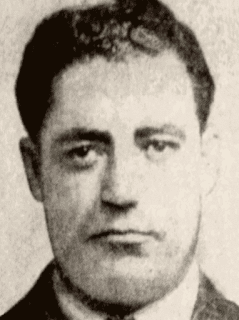
Pasqualina Albano led a violent gang in Springfield MA

Justin Cascio's latest book is scheduled for release next month through Amazon. Pasqualina: The Bootleg Queen of Little Italy tells the story of Pasqualina Albano Siniscalchi Miranda, bootlegger and leader of a violent gang in the South End of Springfield, Massachusetts.

A 2020 Justin Cascio video from YouTube discusses Pasqualina Albano:


The gang included members of Pasqualina's extended family - Albanos, Fiores, Santaniellos - and individuals who would become famous as members of the Springfield Mafia, including "Big Nose Sam" Cufari and the Scibelli brothers.

"I’ve told Pasqualina’s story before, at genealogy and history conferences, and as a video on YouTube," Justin remarked in an October 23, 2025, email announcement. "In my new book, I paint a bigger picture of the worlds she inhabited and ruled over, from car chases to church politics."

In addition to telling the surprising story of the woman gang leader, Justin said his book addresses the earliest origins of the Mafia and the unique relationship of the Springfield, Massachusetts, organization with what became known as the Genovese Crime Family of New York.

Justin is an accomplished genealogist and Mafia historian. His highly regarded first book, In Our Blood: The Mafia Families of Corleone,* was released late in 2023. The author's work also appears on his Mafia Genealogy website, a Mafia Genealogy site hosted on Patreon and in multiple issues of Informer: The History of American Crime and Law Enforcement between 2016 and 2023.

Pasqualina: The Bootleg Queen of Little Italy will be available November 10, 2025, in hardcover (expected list price of $26.99), softcover ($17.99) and e-book ($9.99) formats.


* compensated Amazon affiliate link.

04 February 2025

'Monk' indicted for assault

Gang leader caught after shootout with Pinkertons

On this date in 1904:

Eastman
A New York grand jury on February 4, 1904, indicted gang leader Edward "Monk" Eastman for assault and attempted murder. He was charged with attacking and trying to kill agents of the Pinkerton Detective Agency, who confronted him after he robbed a drunk man of some cash two days earlier.

Eastman, his pal Christopher Wallace and other members of Eastman's gang ventured beyond the confines of their usual Lower East Side territory in the early morning of February 2. On Forty-second Street in Midtown, they spotted a drunk young man counting out cash in a doorway. Eastman and Wallace advanced. Eastman delivered a devastating punch to the man's abdomen, while Wallace grabbed the money.

Two Pinkerton agents, George F. Bryan and John Rogers, then jumped out at the robbers. A scuffle occurred, handguns were drawn and shots were fired. Additional Eastman gangsters rushed in to help Eastman and Wallace escape the Pinkertons. The group ran off on Forty-second Street toward Broadway. But they ran right into New York Police Officer Healy.

Once arrested, Wallace confessed to attempted grand larceny and is believed to have cooperated in the case against Eastman.

At trial in April, it was revealed that the Eastmans' robbery target had been a wayward son of the wealthy Wetmore family and the Pinkertons had been hired by the family to watch over him.

Eastman was convicted of felonious assault. General Sessions Court Judge John W. Goff sentenced him on April 19 to ten years in Sing Sing Prison, the maximum term allowed. The cooperative Wallace was sentenced to just two and a half years for his part in the crime.

While held at Tombs Prison in Manhattan awaiting transfer to Sing Sing, Monk Eastman was interviewed by New York reporters. He expressed just one concern: several of his pet pigeons had eggs that were ready to hatch and he hoped to learn "how they came out" before he was taken out of the city.

Sing Sing Admission Register

He entered Sing Sing on April 22. He would serve better than seven years of his sentence before being released. 

Much more on Monk Eastman and other gangsters of Manhattan's Lower East Side can be found in the 2023 issue of Informer: The History of U.S. Crime and Law Enforcement (available in magazine, book and electronic formats).

Sources:

  • Edward Eastman, no. 54863, Sing Sing Prison Admission Register, received April 22, 1904.
  • "Monk Eastman in pistol battle," New York Evening World, Feb. 2, 1904, p. 2
  • "'Monk' Eastman now indicted," New York Evening World, Feb. 4, 1904, p. 3.
  • "Monk Eastman on trial," New York Sun, April 13, 1904, p. 12.
  • "Monk's pal gets light sentence," New York Evening World, April 21, 1904, p. 7.
  • Statement of commitments to the Sing Sing State Prison during the month of April 1904.
  • "Ten years for 'Monk,'" New York Daily Tribune, April 20, 1904, p. 6.

02 January 2025

Anastasia tale told by his priest brother

I've been reading Anastasia Mio Fratello (Edizioni di Novissima, 1967), written by Albert Anastasia's little brother, Rev. Salvatore Anastasio, a Roman Catholic priest who served for a time in New York City parishes before returning to his native Calabria. 


It's a plodding effort for me, as I'm virtually illiterate in Italian and need to work on translating as I go. I've gotten through Father Salvatore's discussion of the murder of Joseph Terella (pages 58 through 66). This was the murder for which Albert Anastasia was convicted and sentenced to die in the electric chair (reversed on appeal). 

Father Salvatore insisted that he researched this matter more carefully than any other in the book. (He wrote: "...io abbia dedicato ad esso le ricerche più accurate.") So, we should be free to gauge his commitment to accuracy by seeing how well he did here: 

  • Well, he misspelled the victim's name (but, OK, nearly everyone has done that - I recall spelling Terella's name a number of different ways over the years). 
  • Father Salvatore placed the killing on May 19, 1921, when it was actually one year and a few days earlier, Terella died in Long Island College Hospital on May 17, 1920, of injuries suffered the previous day. 
  • He indicated the murder was committed through repeated stabbings with a steel hook. The real cause of death was a gunshot wound to the belly that sliced through the liver, pancreas, several vertebrae and other stuff, causing internal hemorrhage. 
  • Anastasia, he claimed, was working each day at the Brooklyn docks during the period of the murder and its aftermath. But, really, Anastasia took off and hid in Providence, Rhode Island, after the murder. 
  • Father Salvatore said that Anastasia's enemies brought four longshoremen into court to lie about witnessing Anastasia murder Terella. The state's case actually had one key witness, a woman.
  • Father Salvatore's account neglected to mention Anastasia's pal Giuseppe Florino, who was also convicted of this murder, also faced execution and also was later freed.

Terella death certificate.

In almost every detail, aside from the mention that Anastasia was convicted of this murder and later freed, Father Salvatore's account was lacking.

Interestingly, the author stated that an unnamed Calabrian, who felt protective toward Anastasia, acted on his own and without Anastasia's knowledge to kill Terella after it became clear that Terella and his friends (motivated by envy) intended to harm Anastasia. The supposed killer reportedly admitted his crime to Father Salvatore, with Albert Anastasia present, when the Father confronted Anastasia in 1950 about his criminal reputation. The Calabrian said he had been willing to admit his guilt at the time of Anastasia's trial, but Anastasia would not put the man in harm's way and made him swear to keep quiet about it.

It is a nice story. But it seems no more than that. The author, in this case and others. apparently was willing to go to any lengths to deny what everyone else knows to be true: Albert Anastasia was a ruthless and accomplished killer.

By the way, Father Salvatore's book was turned into a movie, released in 1973, just as Father Salvatore passed away. He did not live long enough to see it, and before his death expressed concern that it would not help to repair the reputation of his long-deceased brother. The movie, starring Alberto Sordi as the priest and Richard Conte as Albert Anastasia, is generally billed as a comedy. If anything about the film can be said to be humorous, it is Father Salvatore's blissful ignorance of his brother's long-term role as a gangland boss.

Still from movie Anastasia Mio Fratello


14 December 2024

New in paperback: Fred 'Killer' Burke

Just released: Fred “Killer” Burke: The Hunt for the Most Dangerous Man Alive by Chriss Lyon. The book is available in paperback, 394 pages, through Amazon.


This is an updated special edition of A Killing in Capone’s Playground: The True Story of the Hunt for the Most Dangerous Man Alive, which won a National Indie Excellence Award for True Crime in 2016. It includes new details and photographs acquired since the earlier book's release in 2014.

“Bloody Chicago” was the name given to America’s most corrupt city after the grotesque scene that left seven humans embedded into masonry walls and oil-slickened concrete. Two Thompson submachine guns did the majority of the damage, but the masterminds behind the St. Valentine's Day Massacre escaped. Ten months later on December 14, 1929, St. Joseph, Michigan Police Officer Charles Skelly, working a routine traffic crash, came face to face with a killer.

Shots were fired, the assailant escaped, and the dying Officer Skelly identified his murderer before taking his last breath. The trail led to a home in Stevensville, Michigan, where authorities found an arsenal of weaponry, over $300,000 worth of stolen bonds, bulletproof vests and two Thompson submachine guns. The hideout belonged to Fred Burke, a highly sought suspect in the St. Valentine’s Day Massacre and the most wanted man in the nation.

Lyon
The “backwash of bloody Chicago” had made its way into the rural neighborhoods of Southwestern Michigan and Northern Indiana. Citizens who turned a blind eye to crime helped create “Capone’s Playground,” an environment abundant in all that is illegal and immoral.

Using unpublished police reports, interviews with family members of key witnesses and leading experts, historian Chriss Lyon establishes the foundation for what would develop as a haven for gangsters from the onset of the Prohibition Era through to the mid-twentieth century, while revealing new information about the eventual capture of notorious gangster Fred “Killer” Burke.

Chriss Lyon, a retired public safety professional and historian, has not only walked the beat but shot the most famous Thompson submachine guns in the world, all while documenting and researching the historic era of "The Roaring Twenties." Using techniques of forensic genealogy combined with investigative research, Lyon has been able to uncover little known facts about the people and events surrounding the notorious St. Valentine's Day Massacre.


Ex-New England boss Manocchio dies

Former New England Mafia boss Luigi Giovanni Manocchio, known by the nickname "Baby Shacks," died Sunday, December 8, 2024, at the age of ninety seven. He was a resident of the Rhode Island Veterans Home in Bristol, Rhode Island, at the time of his death.

Manocchio
Manocchio was the last New England crime boss based in Rhode Island before the mob's power center shifted back to Boston. He term as boss began with the 1995 arrest of Boston-based leader Francis "Cadillac Frank" Salemme, and it concluded with his retirement in 2009.

Manocchio was born in Providence in June of 1927. He provided birth dates of June 9 and June 23 for official records. His parents were Nicola and Anna Mary Marino Manocchio. His father, Nicola, originally from the community of Baranello, within Campobasso, Molise, Italy, settled on Providence's Acorn Street with his family while still a minor. Anna Mary was a Rhode Island native born to immigrants from Pietra Vairano, Caserta, Campania, Italy. She was raised on Vinton Street, near Gesler Street, about a block south of Atwells Avenue in the northern portion of Providence's Federal Hill neighborhood. Anna Mary was not yet fifteen when she and Nicola were married on May 17, 1921. 

Luigi Giovanni Manocchio was the second son born to Nicola and Anna Mary. Five years separated him from older brother Andrew. A third brother, Anthony, was born more than a decade after Luigi, about 1939.

Luigi grew up in the Little Italy neighborhood on Providence's Federal Hill during the desperate years of the Great Depression. The family home in 1930 was an apartment at 34 Vinton Street, close to Gesler Street. Nicola worked in the Fulford Manufacturing Company jewelry factory in East Providence. Soon after the state census of 1936, the family moved to 36 Gesler Street. Nicola was a foreman for Fulford by that time, and Andrew had begun work in jewelry manufacturing.

At the age of eighteen, early in 1946, Luigi Manocchio enlisted at Boston as a private in the U.S. Army. His enlistment stated his education included just one year of high school and his civil occupation was "semi-skilled chauffeurs and drivers, bus, taxi, truck and tractor." His term in the Army lasted just one year. He was discharged in March 1947. The reason for the discharge is uncertain. He returned to live with his parents and little brother, then residing at 17 Vinton Street just south of Atwells Avenue. 

Luigi Manocchio's first known arrest occurred in December of 1952. He and two accomplices were charged with the $3,800 gunpoint robbery of a D.R. Carner Company payroll truck. Initially charged with two counts of assault and robbery, illegal possession of a revolver and driving a stolen car, Manocchio managed to have all but the possession charge dropped. He received a suspended sentence.

In the later 1960s, Manocchio was apparently part of the Providence Mafia organization run by Raymond L.S. Patriarca out of the Coin-O-Matic Distributing Company headquarters on Atwells Avenue. He had acquired the nickname "Baby Shacks," an apparent reference to an older underworld-connected relative known as "Shacks" for his common practice of "shacking up" with women. 

Patriarca
At that time, Patriarca had a brief conflict with the Marfeo brothers, stubbornly independent gambling racketeers in Providence. On July 13, 1966, William Marfeo was shot four times in a Federal Hill restaurant phone booth. He died on the way to Rhode Island Hospital. Press reports indicated that the forty-one-year-old Marfeo had a police record dating back twenty-five years. Manocchio, then forty two, was shot and wounded in the neck in a gunfight on Federal Hill on December 1, 1967. Police later arrested his pal Joseph A. Schiavone, who was found to be carrying a pistol. They initially (and, it seems, incorrectly) charged Schiavone with committing the shooting assault of Manocchio. According to reports, Manocchio and Schiavone went into hiding in the Midwest for a time until the matter was forgotten.

Rudolph Marfeo, younger brother of the murdered William, was struck and killed by a shotgun discharge on April 20, 1968, while in Pannone's Market, 282 Pocasset Street in Providence. His associate and supposed bodyguard Anthony Melei was also killed. The market was a regular hangout for Marfeo, who lived in an apartment upstairs. Police determined that Patriarca had ordered the killing of Marfeo because, despite what occurred to his brother, he still refused to share the proceeds of his gambling operations with the crime family. The order reportedly was passed through Patriarca aide Henry Tameleo and Ronald Cassesso. Manocchio was one of the men accused of taking part in the planning of the hit.

In the fall of 1968, Manocchio was arrested in connection with the killings of Rudolph Marfeo and Anthony Melei. By that time, Patriarca and two codefendants had already been convicted of the earlier murder of William Marfeo. Manocchio was released on bail and promptly disappeared. 

A nationwide search was conducted for him over the course of the next decade. The FBI watched and repeatedly questioned those known to be close to him, including attorney and friend Thomas DiLuglio and Manocchio's brother Anthony, by then a practicing medical doctor. FBI agents received tips that Manocchio was hiding in New York with Nicholas Bianco. A Providence native and a former New England mafioso, Bianco had relocated to Brooklyn and associated himself with the Colombo Crime Family. Agents found no evidence to support the tip and learned from police agencies in Rhode Island and Massachusetts that there was no information connecting Manocchio with Bianco. Interviewed by the FBI in autumn 1970, Bianco denied knowing Manocchio. Agents also looked into tips that Manocchio was in Ohio; Chicago, Illinois; Baltimore, Maryland; Florida; various locations in Europe.

During Manocchio's absence, Patriarca's problems grew. He was tried (acquitted) for loan sharking in 1969 and indicted in that same year of conspiracy to murder in the Rudolph Marfeo case. He and four codefendants were convicted in March 1970. The different cases and convictions resulted in Patriarca being transferred back and forth between state and federal lockups. He was paroled from his last remaining state sentence early in 1975. (He faced additional charges of murder conspiracy and labor racketeering late in life but died in 1984 before those could be brought to trial.)

Manocchio surrendered himself to authorities on July 13, 1979, apparently believing that advancing years and declining mental faculties of a key witness against him would prevent him from being convicted. However, a jury found him guilty as an accessory to murder in 1983, and he was sentenced to serve two consecutive life sentences plus ten years. He won release on bail during a 1985 appeal and succeeded in having his conviction overturned.

The later 1980s saw Manocchio rise to become a powerful leader in the New England Crime Family and a close ally of Boston-based "Cadillac Frank" Salemme. Manocchio reportedly oversaw bookmaking, loan sharking and robbery rackets in Rhode Island. He used a Federal Hill laundromat as his headquarters and lived modestly in an apartment above the Euro Bistro restaurant on Atwells Avenue. Overall leadership of the New England organization was cloudy in the period. Patriarca was succeeded for a time by his son. Factions emerged and some violence erupted. Bianco returned to New England to oversee operations for a time, but he was removed by a successful prosecution for racketeering conspiracy. By 1991, Salemme was in control.

Manocchio (1990s)
A reputed hit man, Kevin Hanrahan was murdered in 1992. Law enforcement later learned that Hanrahan had been involved in a failed effort to murder Manocchio through a bombing of the Euro Bistro. Statements obtained for court documents indicated that Salemme and Manocchio planned the vendetta murder of Hanrahan, but neither Mafia leader was charged.

Salemme was taken into custody in 1995, and Manocchio was elevated to the position of boss. In the following year, Manocchio was tied in with a large New England burglary ring. Investigators learned that he installed stolen appliances, gifted to him as tribute from ring members, in an apartment he renovated for his mother. After some negotiations, Manocchio pleaded guilty to a misdemeanor charge of accepting stolen applicance and received a suspended sentence. 

FBI agents in 2008 linked Manocchio to the extortion of protection payments from Providence-area strip clubs, but he was not immediately prosecuted. Perhaps anticipated the case against him, in 2009, Manocchio decided to step down from New England Mafia leadership. The federal extortion case proceeded in 2011 with his January arrest at the Fort Lauderdale, Florida, airport. The case involved threats of violence against strip club owners if monthly payments were not provided. Though Manocchio insisted that he had never threatened anyone, early in 2012 he reached another plea deal. He admitted conspiring in a racketeering enterprise. On May 11 of that year, he was sentenced to five and a half years in prison. He made a brief comment at his sentencing hearing: "By virtue of my position, I inherited the deeds of my associates. I simply do not want my family and my friends to think that I personally threatened anyone."

He was released from federal prison in North Carolina in 2015 and was allowed to spend six remaining months of his sentence in home confinement. He reportedly lived quietly through his remaining years.


Sources

  • "Alleged N.E. Cosa Nostra chieftain faces trial," Springfield MA Union, Dec. 14, 1967, p. 15.
  • Barry, Dan, "R.I. crime figure Nicholas Bianco dies in prison," Providence Journal, Nov. 15, 1994, p. 1.
  • Berger, Joseph, "Raymond Patriarca, 76 dies; New England crime figure," New York Times, July 12, 1984.
  • Clendinen, Dudley, "Of crime, equal rights and a mental hospital," New York Times, Nov. 5, 1984.
  • Connolly, Richard J., and Jim Calogero, "Raymond Patriarca dies at 76; reputedly ruled N.E. organized crime," Boston Globe, July 12, 1984.
  • "FBI nabs a fifth in R.I. gang killings," Newport RI Daily News, Aug. 15, 1969, p. 1.
  • "Gang killing being probed," Fitchburg MA Sentinel, July 14, 1966, p. 13.
  • "Hub death may be gang slaying; man also wounded in Rhode Island," Holyoke MA Transcript-Telegram, Dec. 1, 1967, p. 14.
  • Krupa, Gregg, "A look inside the Boston mob," Providence Journal, May 26, 1985, p. A1.
  • Louis Manocchio World War II Army Enlistment Record, Fort Banks, Boston MA, service no. 31507596, Jan. 10, 1946.
  • MacGougall, Ian, "Reputed mob boss pleads not guilty," Boston Globe, Feb. 25, 2011, p. B3.
  • Marriages registered in the City of Providence R.I. for the Year Ending December 31st, 1921, p. 197, Ancestry.com.
  • McWeeney, Sean M., "Luigi Giovanni Manocchio... Fugitive," FBI report of Boston office, file no. 166-4355-42, NARA no. 124-10212-10052, Oct. 23, 1969.
  • Mooney, Tom, "'I inherited the deeds of my associates,'" Providence Journal, Dec. 8, 2024.
  • Murphy, Shelley, "Reputed ex-N.E. mob boss arrested," Boston Globe, Jan. 21, 2011, p. 1.
  • Nicola Manocchio World War I Draft Registration, serial no. 3871, order no. 3746, Division No. 9, Providence RI, Sept. 12, 1918.
  • Nicola Manocchio World War II Draft Registration, serial no. T-790, oreder no. T10-160, Local Board No. 11, Providence RI, Feb. 16, 1942.
  • "Patriarca is released in $25,000 bail; arrested for first time in 20 years," Nashua NH Telegraph, June 22, 1967, p. 20.
  • "Patriarca jailed," Fitchburg MA Sentinel, March 19, 1969, p. 5.
  • "Patriarca released on parole," Berkshire Eagle, Jan. 9, 1975, p. 8.
  • "Patriarca, 2 others sentence date set," Fitchburg MA Sentinel, March 9, 1968, p. 1.
  • "Patriarca, four others convicted," Fitchburg MA Sentinel, March 28, 1970, p. 1.
  • "Patriarca: The man and the mob," Providence Journal, July 15, 1984.
  • "Raymond Patriarca," TIME, July 23, 1984, p. 103.
  • Reppucci, Charles A., "Luigi Giovanni Manocchi, aka-Fugitive...," FBI report of Boston office, file no. 166-4355-98, NARA no. 124-10207-10267, Sept. 25, 1970.
  • Reppucci, Charles A., "Luigi Giovanni Manocchio, aka-Fugitive...," FBI report of Boston office, file no. 166-4355-100, NARA no. 124-10207-10269, Oct. 30, 1970.
  • Reppucci, Charles A., "Luigi Giovanni Manocchio," FBI report BS 166-845, NARA #124-10207-10271, Jan. 29, 1971. 
  • State of Rhode Island Census, Providence County, Providence City, Census Tract 253, Jan. 20, 1936.
  • Sullivan, John G., "Luigi Giovanni Manocchio, aka-Fugitive...," FBI report of Boston office, file no. 166-4355-120, NARA no. 127-10207-10290, Jan. 31, 1972.
  • "Two men slain gangland-style in Providence," Boston Globe, April 21, 1968, p. 22.
  • "Two mob members admit to extortion," Boston Globe, March 14, 2012, p. B2.
  • United States Census of 1920, Rhode Island, Providence County, Providence City, Ward 9, Enumeration District 286.
  • United States Census of 1930, Rhode Island, Providence County, Providence City, Ward 9, Enumeration District 4-104.
  • United States Census of 1940, Rhode Island, Providence County, Providence City, Ward 13, Enumeration District 6-253.
  • United States Census of 1950, Rhode Island, Providence County, Providence City, Enumeration District 7-366.
  • White, Tim, "Manocchio, last New England mob boss from Rhode Island, dead at 97," WPRI, wpri.com, Dec. 8, 2024.
  • Valencia, Milton J., "5 Mafia figures to plead guilty," Boston Globe, Feb. 17, 2012, p. B1.
  • Valencia, Milton J., "Former N.E. mob boss gets 5 1/2 years," Boston Globe, May 12, 2012, p. B2.

26 November 2024

Joe 'Adonis' Doto dies in exile

On this date in 1971:

New York Daily News

Giuseppe Doto, better known by gangland nickname Joe Adonis, died Friday, November 26, 1971, at the general hospital in Ancona, Italy. He was sixty nine years old. Death was caused by complications of pneumonia and heart disease.

Born in Montemarano, near Naples, late in 1901, young Doto entered the U.S. with his parents and settled in Brooklyn. As Adonis, he grew into a U.S. Mafia powerhouse from the days of Prohibition into the 1950s. Hounded by city authorities in the early 1940s, he relocated to the Fort Lee, New Jersey, area. Though involved in numerous rackets for decades, he managed to avoid prison until a New Jersey gambling conviction in 1951 earned him a two- to three-year sentence.

In 1954, he got into some trouble due to his under-oath claims of being born in Passaic, New Jersey. A supporting record was found to be fraudulent, and Adonis was traced to his origin in Montemarano. Faced with prison sentences and likely deportation for perjury, Adonis agreed to leave the country.

Leaving behind his wife Jean and four children in New Jersey, he sailed for Italy aboard the ocean liner Conte Biancamano in 1956 (reportedly booking an expensive three-room cabin for the trip). He stayed for a time with relatives in the Naples area, but eventually settled in downtown Milan in northern Italy.

He was reported to be weak and in poor health in spring of 1971, when authorities decided that his apparent continuing underworld connections were a threat to order. A court sentenced him to four years of close police surveillance in the small community of Serra de Conti, about twenty five miles inland of the Adriatic coastal community of Ancona. At the time, Adonis protested his relocation: "I'm just a poor old man. I don't understand what you've got against me." He called the sentence an exile within an exile and expressed his certainty that the move "will kill me."

On appeal, Adonis succeeded in having the surveillance sentence reduced from four years to three. But he was losing a battle against pneumonia. On November 23, 1971, he was admitted to the hospital in Ancona. When he died, a few days later, his thirty-two-year-old secretary, Rosemarie Bloch, was by his bedside. According to one report, Adonis's wife and two of their four children, learning of his illness, flew to Italy and arrived in Ancona just minutes before he passed away.

Rosemarie Bloch and Adonis's daughter, Mrs. Dolores Maria Olmo, made arrangements with the U.S. consulate at Rome to have Adonis's remains flown back to the U.S. for burial. The body arrived at Kennedy Airport in New York on December 2. It was contained in a burnished bronze coffin in the cargo hold of an Alitalia jet. The A.K. Macagna Funeral Home of Anderson Avenue in Fort Lee, New Jersey, handled the final arrangements. 

Adonis was buried at Madonna Cemetery in Fort Lee on December 6. His send-off was modest by gangland standards. Three cars of floral tributes led a cortege of fifteen cars between the funeral home and Epiphany Church, where a funeral Mass was celebrated. Family members and close friends proceeded on to Madonna Cemetery, straddling the Fort Lee-Leonia boundary. They were met there by a group of newsmen. The family left the site before the coffin was lowered into the ground.

Sources 

  • "Adonis to lie in N.J. grave," New York Daily News, Nov. 30, 1971, p. 80.
  • "Adonis' body returned for U.S. burial," Newsday (Nassau Edition), Dec. 3, 1971, p. 33.
  • "Adonis' mourners," photo caption, Newsday (Nassau Edition), Dec. 7, 1971, p. 32.
  • "Joe Adonis one of 8 cited in Dewey reply," Brooklyn Daily Eagle, Dec. 3, 1937, p. 1.
  • "Joe Adonis, underworld gambling king, dies," New York Times, Nov. 27, 1971, p. 34.
  • Charlton, Linda, "Returned to Italy in '56," New York Times, Nov. 27, 1971, p. 34.
  • Lee, Henry, "Joe Adonis dies unwanted," New York Daily News, Nov. 27, 1971, p. 2.
  • Murray, Leo, "Offer birth certificates from Italy in Adonis case," Paterson NJ Morning Call, Jan. 15, 1954, p. 1.
  • Packard, Reynolds, "Adonis' kin here asks for body," New York Daily News, Nov. 28, 1971, p. 14.
  • Plosia, Les, "Few turn out for Adonis burial," Passaic NJ Herald-News, Dec. 7, 1971, p. 12.
  • Pugh, Thomas, "The late Joe Adonis home again," New York Daily News, Dec. 3, 1971, p. 4.
  • Special Committee to Investigate Organized Crime in Interstate Commerce, Investigation of Organized Crime in Interstate Commerce, Part 7, New York - New Jersey, U.S. Senate, 81st Congress 2nd Session, 82nd Congress 1st Session, Washington D.C.: U.S. Government Printing Office, 1951, p. 280-301. 

16 November 2024

November release planned for Gangster Hunters

Gangster Hunters
How Hoover’s G-Men Vanquished
America’s Deadliest Public Enemies
by John Oller

John Oller’s meticulously researched account of the FBI’s early days is due to be released by Dutton (imprint of Penguin Publishing Group) on November 26, 2024.

John Dillinger, Bonnie and Clyde, Baby Face Nelson and Pretty Boy Floyd – these infamous Depression-era criminals have been immortalized as some of the most vicious felons in our history, but they share another commonality: every single one was brought down by the Federal Bureau of Investigation during a chaotic war on crime, which started in 1933 and thrust the FBI into the national spotlight for the first time. 

Surprisingly little has been written about field-level agents responsible for hunting down the most dangerous criminals and bringing them to justice... until now. In this new book, Gangster Hunters, critically acclaimed author John Oller (also author of the 2021 release Rogues Gallery) brings to light the true stories of FBI’s unsung heroes. He gives play-by-play accounts of the G-men’s blood-soaked shootouts and intrepid pursuits of fleeing desperadoes while also exploring their methodical detective work.

John Oller
It might come as a surprise that most young FBI agents in the 1930s weren’t prepared for the wild lifestyle their careers would require. The Bureau initially had no jurisdiction over violent crimes, such as murders, bank robberies and kidnappings, and its special agents had little reason to believe they would be involved in such matters. But with Hoover at its helm, FBI quickly gained power and the fresh-faced agents found themselves in high-speed car chases wrapped in bullet-proof vests. Some agents sacrificed everything in the pursuit of justice, some were unceremoniously blacklisted by Hoover, and others simply never received the attention they deserved.

Gangster Hunters is full of exciting new primary research and dozens of never-before-seen photos. Oller interviewed thirty descendants of the early FBI agents he profiles. Weaving together their accounts, his book is able to correct historical accounts and myths about gangsters and manhunts that have long been considered fact.

The print edition of the book contains about 500 pages, including index, endnotes and bibliography. Hardcover and Kindle ebook formats can be ordered now through Amazon.com.

08 November 2024

Valachi's world

Issue 34 (November 2024) of Informer has been released and is widely available in magazine, book and electronic formats. The issue, titled The Treacherous World of Joseph Valachi, focuses on Mafia informant Valachi, his time and place, and many of the individuals who played roles in his life.

A rare primary source into Castellammarese War-era Mafia history, Joseph Valachi also described the early gangland of East Harlem, Manhattan and the Bronx, and provided a unique soldier-level view of New York-area organized crime from Prohibition to Apalachin. An early FBI informant, Valachi was the focus of a best-selling book and a popular movie, as well as televised Senate testimony and a lengthy autobiography. Yet, a great deal of the true Valachi story has remained untold.

Now, 60 years after Valachi put pen to paper to tell his story, a team of historians from around the globe is revealing long hidden aspects of his life and investigating the individuals who influenced him.

This Informer issue features articles on various phases of Valachi's existence in and out of "cosa nostra," bios of those who played important roles in his life and background of his time and place. The issue is illustrated with photos, documents and maps. 

Individual biographies are presented for Judge Matthew Thomas Abruzzo, Frank “Big Dick” Amato, Ludwig “Dutchman” Augustine, Brother Abel, Frank “Chic 99” Callace, Edward “Eddie Starr” Capobianco, Angelo Caruso, Stephen “Buck Jones” Casertano, Joseph “Muskie” Castaldo, Carmine “Dolly Dimples” Clementi, Ettore “Eddie” Coco, Vincent “Doc” D’Anna, John “Johnny Dee” DeBellis, Dominick “Dom the Sailor” DiQuarto, Michael DiBenedetto, Assoc. Warden Marion Jesse Elliott, Stephen Franse, Narcotics Agent George H. Gaffney, Eugene “Gene” Giannini, Peter “Thomas O’Neill” Heslin, Peter “Muggin” Leone, Frank “Cheech” Livorsi, Samuel “Sam Medal” Medaglia, Nick Paduano, Michael “Little Apples” Reggione, John “Bum” Rodgers, John “Curley” Russomano, “Sadie,” Fiore “Fury” Siano, Innocenzio “John the Bug” Stoppelli, Giuseppe “Diamond Joe Peppe” Viserti, Tony “Sharkey” Zaccaro. The life stories of many other individuals are explored within feature articles and sidebar articles.

Contributors to the issue: Thomas Hunt (U.S.), Steve Turner (U.K.), Fabien Rossat (France), Jon Black (U.K.), Thibaut Maïquès (France), J. Michael Niotta PhD (U.S.), Thom L. Jones (New Zealand), Patrick Downey (U.S.), Ellen Poulsen (U.S.), Justin Cascio (U.S.), Scott Deitche (U.S.).

In addition to Informer's traditional print and electronic magazine formats, this issue is available in hardcover, paperback and ebook formats.The magazine and e-magazine editions total about 260 pages, and the book editions are about 500 pages. The available formats are compared here:

Magazine layouts

Book layouts


16 January 2024

William Flynn bio, 'Bulldog Detective'

The Bulldog Detective: William J. Flynn and America's First War Against the Mafia, Spies, and Terrorists by Jeffrey D. Simon was released today (January 16, 2024). It is available in hardcover and ebook formats through popular booksellers Amazon.com and BarnesandNoble.com, as well as through academic nonfiction publisher, Rowman & Littlefield.


Publisher's description

America in the early twentieth century was rife with threats. Organized crime groups like the Mafia, German spies embedded behind enemy lines ahead of World War I, package bombs sent throughout the country, and the 1920 Wall Street bombing dominated headlines. Yet the story of the one man tasked with combating these threats has yet to be told. The Bulldog Detective: William J. Flynn and America’s First War Against the Mafia, Spies, and Terrorists is the first book to tell the story of Flynn, the first government official to bring down the powerful Mafia, uncover a sophisticated German spy ring in the United States, and launch a formal war on terrorism on his way to becoming one of the most respected and effective law enforcement officials in American history.

Author Jeffrey Simon
Long before Eliot Ness and the Untouchables went after Al Capone and the Italian mob in Chicago, Flynn dismantled the first Mafia family to exist in America. Next stop for the indefatigable crime fighter would be Chief of the Secret Service where he would set his crosshairs on the country’s most notorious currency counterfeiters. Coined “the Bulldog” for his tenacity, Flynn’s fame soared as he exposed Kaiser Germany’s sophisticated spy and sabotage ring on the cusp of America’s entry into World War I. As the Director of the Bureau of Investigation (the forerunner of the FBI), the Bulldog would devise the first counterterrorist strategy in U.S. history. In this riveting biography, author Jeffrey D. Simon brings to life the forgotten saga of one of America’s greatest crime and terrorist fighters.


Jeffrey Simon's other works include America's Forgotten Terrorists, The Alphabet Bomber and Lone Wolf Terrorism

09 November 2023

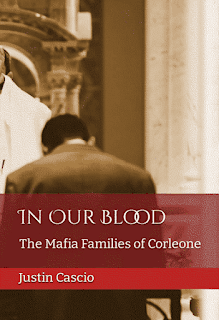
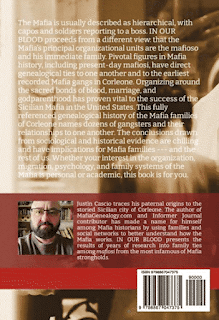
'In Our Blood' by Justin Cascio

In Our Blood: The Mafia Families of Corleone by Justin Cascio is now available in hardcover, paperback and ebook editions.

While the Mafia criminal society is traditionally viewed as a hierarchical organization, author Justin Cascio argues in this book that Mafia networks are largely based on kinship ties. 

The publisher of the Mafia Genealogy website and a frequent contributor to Informer journal, Cascio has channeled years of research into his first book-length project. He notes that pivotal figures in Mafia history, including present-day mafiosi, have direct genealogical ties to one another and to the earliest recorded gangs in Corleone, Sicily. In addition to bloodline and marriage connections, some mafiosi also linked through the significant religious/family role of godparent. 

Cascio discusses dozens of gangland figures in the United States and Sicily as he analyzes family-based networks that include thousands of individuals. Along the way, he tackles some of the lingering questions about the Mafia: How old is the criminal society? Where was it formed? How did it spread from Sicily to the U.S.?

For the benefit of researchers, Cascio has provided references supporting his assertions. The hardcover and paperback editions of In Our Blood weigh in at 390 pages and can be ordered now through Amazon.com. The Kindle ebook, rated by Amazon at a print length of 532 pages, can be preordered now, with deliveries beginning November 12. 


24 October 2023

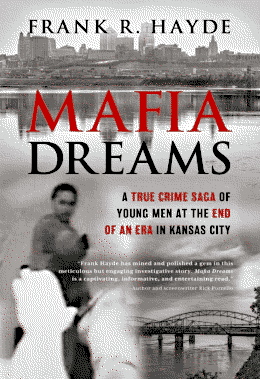
'Mafia Dreams' by Frank Hayde

Mafia Dreams: A True Crime Saga of Young Men at the End of an Era in Kansas City by Frank Hayde (BookBaby, July 2023). Paperback 228 pages. Also Kindle e-book.

Kansas City’s historically powerful Mafia crime family appeared to be on its last legs in the 1990s. But “the life” still beckoned to a group young men with gangster ambitions. 

The FBI was still battling the Mafia remnants that would stubbornly survive into the next millennium. Federal agents in Kansas City also pursued a massive insurance fraud enterprise run by the Riley family. The Rileys were a criminal organization unto themselves. Their youngest member, Joseph Riley, had dreams of gangster glory. Big-time white-collar crime soon collided with the gritty underworld in a deadly drug sting that attracted nationwide attention and tested the limits of a controversial legal doctrine. 

Through copious research and interviews with principal participants, author Frank R. Hayde has pieced together an epic true crime tale with surprising connections and startling events.

02 October 2023

Gangsters of Lower East Side

Informer's October 2023 issue, entitled "Gangsters of New York's Lower East Side," includes twelve feature articles and eleven sidebars related to the gangland history of the area known as the "greatest breeding ground for gunmen and racketeers... this country has ever seen." The issue also includes several articles on other subjects.

Magazine (left) and book covers.

Thomas Hunt, Justin Cascio, Patrick Downey, Michael O'Haire, Steve Turner and Matt Ghiglieri contributed articles.

The Informer issue is available in seven formats. Print magazine and electronic (PDF) magazine editions can be obtained through the MagCloud service. Hardcover and paperback print book and Kindle ebook formats are listed with Amazon. EPUB ebook and abridged audiobook editions are sold through Google Play Books.

Lower East Side history articles focus on the following subjects:

  • The Whyos gang.
  • Bandits' Roost photograph.
  • John McGurk's "Suicide Hall." (Sidebar on gambling.)
  • Monk Eastman. (Sidebar on Eastman's killer.)
  • Mafia boss Nicola Taranto. (Sidebar on rumored Mafia headquarter on Mott Street.)
  • Paul "Kelly" Vaccarelli. (Sidebars on Irving Berlin, Sirocco and Tricker, Torrio and Vannella, Bellantonis of Broome Street.)
  • Chinatown Tong Wars.
  • Frank Lanza businesses.
  • "Johnny Spanish" Mistretta
  • Meyer Lansky's youth. (Sidebars on Mutty, Lucy and Kitty; Dutch Goldberg; Gurrah, Lepke, Curly and Bugsy; Red Levine.)
  • Killings on Second Avenue.
  • Narcotics racketeers.

The issue is illustrated with numerous photographs and a dozen maps. It runs 174 pages (including covers and ads) in magazine format and 370+ pages in print book format. The auto-narrated audiobook omits some material unrelated to the main subject. It runs about eight and a half hours. This is the thirty-third issue of the journal, first published in 2008.

For more information, visit Informer's website.

23 February 2023

Los Angeles boss Dragna found dead in hotel

 On this date in 1956:

San Bernardino County Sun

Jack Dragna, longtime underworld boss of southern California, was found dead of an apparent heart attack in a Los Angeles hotel room on February 23, 1956. 

Dragna appeared to rise to command a Los Angeles-based Mafia organization during the Prohibition Era. He was uncontested boss from about 1931 until the moment of his death and evidently had strong connections to underworld leaders in New York and Cleveland. The regional Mafia during his reign was noted for its involvement in luxurious off-shore gambling ships as well as its failures to secure control of nearby Las Vegas casinos and, despite several attempts, to eliminate rival gambling racketeer Mickey Cohen. Dragna was succeeded as boss by attorney Frank DeSimone.

Often suspected of wrongdoing but rarely convicted, Dragna managed to avoid serious legal jeopardy between Prohibition and the early 1950s. Then the attention of local, state and federal law enforcement fell on him. His first dramatic setback occurred in late June 1951, when he was convicted of "lewd vagrancy" and "resorting" for an affair with twenty-three-year-old "cigarette girl" Annette Eckhardt. The case involved tape recordings of Dragna and Eckhardt activities (including a nude canasta cardgame) inside a love-nest at 330 S. Mariposa Street. Dragna that July was initially sentenced to six months behind bars, but he was able to reduce the jail sentence to under a month, which he served in June of 1952.

A state crime commmittee report released in 1953 labeled him the chief of the southern California branch of the U.S. Mafia (referred to in the jargon of the time as "L'Unione Siciliano"):

There can be little doubt that Jack Dragna and his gang of associates, such as the Sicas and the Adamos of Los Angeles, and the Matrangas, Dippolitos and Le Mandris of San Bernardino County, were all connected with the notorious L'Unione Siciliano. Certain papers seized by the Los Angeles police on February 14, 1950, from the Dragnas definitely tend to confirm this view. Several small address books were taken from the gangsters. The names listed read like a Who's Who of the Mafia in the United States. Some of them are regarded as among the most powerful and dangerous professional criminals in the Country. They also contained, of course, the usual sprinkling of names of police officers, district attorney's investigators, bail bond brokers, lawyers and lobbyists. That these acquaintances were business rather than social is indicated in many instances by Dragna's canceled checks, the payees of which were often known gangsters. The seized papers also showed that gangster funds are being invested in certain legitimate businesses, such as clothing, fruit, wine, olive oil and importing.

Dragna was battling a U.S. deportation order at the time of his death. The government's case against him related to a Mexico vacation he took in 1932. When reentering the U.S. from Mexico, Dragna falsely claimed U.S. citizenship. (Dragna applied for citizenship in the 1940s, but his application was denied.) The false claim resulted in his arrest by federal authorities twenty years later. That arrest occurred December 8, 1952, at 3927 Hubert Avenue, Los Angeles, his home at the time.

Dragna (LA Times)
In the summer of 1953, he was held for deportation at a detention center on Terminal Island (Los Angeles Harbor Region) when his wife Frances passed away. Through legal maneuvers, he managed to delay deportation and to win release under $15,000 bond.

At about that time, he reportedly had a home at 4757 Kensington Drive in San Diego and apparently visited with his nephew Louis Dragna at 1429 Thelborn Street in the Los Angeles suburn of West Covina. On February 10, 1956, however, he became a resident of the Saharan Hotel, 7212 Sunset Boulevard (described in one newspaper as a $7 a day motel). According to hotel manager Alexander Germaine, he checked in under the alias of "Jack Baker."

On Thursday, February 23, hotel maid Mrs. Alice Charles (named "Alice Dick" in one account) found Dragna dead in his bed and summoned authorities. Reports stated that Dragna was dressed in a set of pink pajamas. Police found bottles of heart medication at his bedside, along with two sets of false teeth. They concluded that he suffered a heart attack sometime the previous night.

A total of $986.71, including nine hundred-dollar bills, was found in his possession. An identification card bore the name Jack Ignatius Dragna, accompanied by the address of nephew Louis. Dragna's late model Cadillac was found parked outside the hotel. In Dragna's luggage, police found a small statuette of Jesus.

While police were searching the hotel room, they received a call on the room telephone from Dragna's daughter Anna Niotta of San Diego. Mrs. Niotta reportedly had heard a report of her father's death on the radio.

In its report of the sixty-four-year-old Dragna's demise, the Los Angeles Times noted that the longtime gangland leader had always been conspicuously absent from incidents of bloodshed during his reign:

The reputed top man of this area's Sicilian Black Hand society never turned up in the vicinity of violence. It was standing conversation in the underworld that whenever the shotguns began to go off, Dragna would be discovered peacefully undergoing a checkup in a hospital.

Sources:

  • "Dragna, 66, dies of heart attack," San Fernando CA Valley Times, Feb. 24, 1956, p. 2.
  • "Dragna arrested for deportation by U.S.," Hollywood CA Citizen-News, Dec. 8, 1952, p. 1.
  • "Jack Dragna, Mafia gang figure, found dead in bed," San Bernardino County CA Sun, Feb. 24, 1956, p. 1.
  • "Jack Dragna," Findagrave.com, March 21, 2002, accessed Jan. 1, 2016.
  • "Jack Dragna behind bars," Los Angeles Mirror, June 5, 1952, p. 6.
  • "Jack Dragna found dead in Sunset Blvd. hotel," Los Angeles Times, Feb. 24, 1956, p. 1.
  • "Jack Dragna held guilty in vag case," Los Angeles Mirror, June 27, 1951, p. 12.
  • "Jack Dragna in move to quit jail," Los Angeles Daily News, June 13, 1952, p. 57.
  • "Jack Dragna sentenced to 180 days in jail," Los Angeles Times, July 27, 1951, p. 2.
  • "U.S. nabs Jack Dragna on illegal entry charge," Los Angeles Times, Dec. 9, 1952, p. 2.
  • Jack Ignatius Dragna, California Death Index, Los Angeles, Feb. 23, 1956.
  • Special Crime Study Commission, Final Report of the Special Crime Study Commission on Organized Crime, Sacramento: State of California, 1953, p. 64.


04 January 2023

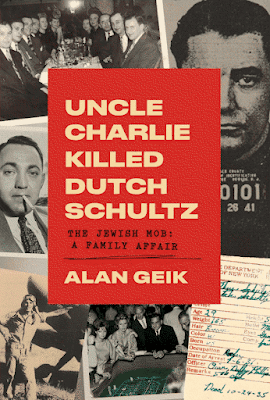
'Uncle Charlie' and the Jewish Mob

In Uncle Charlie Killed Dutch Schultz, author Alan Geik tells of his family's connection to noteworthy Jewish-American gangsters of New York City. These eastern European immigrant outlaws, whose adventures were preserved through many years of Geik kitchen table discussions, became the foundation of a uniquely American organized crime network.

Determined to escape by any means the poverty and congestion of their Lower East Side slum neighborhood, when merely boys they turned to crime and combined into Prohibition Era gangs. They graduated from petty offenses to bootlegging and hijacking to labor racketeering and beyond. Eventually, they branched out into casino gambling, stolen goods fencing and professional murder. Along the way, they violently tangled with each other, with outside gangs, with strikebreakers and with American Nazis. Ultimately, they entered into a cooperative agreement with Italian-American gangsters and formed a monopolistic rackets syndicate, an entity Geik describes as "the biggest cash flow business in American history - organized crime."

Workman
The "Uncle Charlie" of the book title, refers to Charles "Charlie the Bug" Workman, a professional assassin. Linked with rackets boss Louis "Lepke" Buchalter and with Brooklyn killers later referred to as "Murder, Inc.," Workman eventually served twenty-three years of a life prison sentence for the October 23, 1935, murder of Arthur "Dutch Schultz" Flegenheimer. Workman was released from prison in March of 1964. Geik reports that his own first conversation with the man he knew as "Uncle Charlie" occurred about that time.

While the title focuses on Workman and the earliest chapters are confined to the New York area, the book is more wide-ranging. Geik discusses crime figures Arnold Rothstein, Meyer Lansky, Abe "Kid Twist" Reles and others. And he ventures out to such places as Cleveland, Las Vegas and Havana.

Uncle Charlie Killed Dutch Schultz: The Jewish Mob: A Family Affair was released in November 2022. It is available in paperback (284 pages) and Kindle ebook editions through Amazon.com.

27 December 2022

'Ten Notches' examines Pretty Boy Floyd

Ten Notches: Murders Committed by Pretty Boy Floyd, written by Jeffery S. King, tells the life story of Charles Arthur "Pretty Boy" Floyd, late Prohibition Era gangster and bank robber, through detailed accounts of the murders attributed to him. 

The author notes that, after Floyd's death in a shootout with law enforcement, his watch was found to be marked with ten notches. The FBI felt the notches correlated with the number of men Floyd had killed during his criminal career. His ten victims, including seven members of law enforcement, were slain between March 25, 1931, and the infamous Kansas City Massacre of June 17, 1933.

The author pays special attention to the Kansas City Massacre and to the work of FBI agent Melvin Purvis, who led authorities on a successful hunt for Floyd.

Ten Notches is 216 pages, including eight pages of photographs and four pages of bibliography. The work is footnoted. First released in late summer of 2022, it is available in paperback and Kindle e-book formats through Amazon.com.

Author Jeffery S. King, a former reference librarian for the Bureau of the Census and for the Washington, D.C., Public Library, has also written The Life and Death of Pretty Boy Floyd, The Rise and Fall of the Dillinger Gang and other true crime books.

01 November 2022

November 2022 issue of Informer

The Mob in Youngstown

Organized Crime in the Mahoning and Shenango Valleys

Informer's 32nd issue was released today (Tuesday, Nov. 1, 2022). "The Mob in Youngstown" issue tracks the history of organized crime in the area of Youngstown, Ohio, from the earliest reports of the 1890s though the exposure and destruction of the Mob presence more than a century later. 

The Youngstown underworld was unusually complex, as four Mafia organizations - those from Pittsburgh, Cleveland, Detroit and Buffalo - a non-Mafia Calabrian criminal society and other gangs all had interests in the region, cooperating and competing with each other at different times. Sitting at the approximate midway point between Cleveland and Pittsburgh, assigned "open city" status by U.S. Mafia bosses and afflicted by intensely corrupt political and law enforcement leaders, Youngstown was an underworld frontier where the rules - even those made by outlaws to govern their own interactions - were widely ignored.

Readers of this issue will learn about the secret regional groups behind names like, "Society of Honor," "Sacred Circle" and "Society of the Banana." They will encounter crime figures like "Fats" Aiello, Ernie Biondillo, Frank Cammarata, "Cadillac Charlie" Cavallaro, Joe Cutrone, "Tony Dope" Delsanter, Vince DeNiro, "Wolf" DiCarlo, "Big Jim" Falcone, Mike Farah, "Red" Giordano, "Big Dom" Mallamo, Dominick Moio, "Two-Gun Jimmy" Prato, Rocco Racco, Rocco Strange, Lenny Strollo, "Zebo" Zottola, as well as the Barber brothers, the Carabbia brothers, the Naples brothers, the Romeo brothers and many more.

"The Mob in Youngstown" features the writing and research contributions of James Barber, Justin Cascio, Margaret Janco, Thom L. Jones, Michael A. Tona, Edmond Valin and Thomas Hunt.

The issue is available in Informer's traditional print magazine (188 pages, including covers) and electronic PDF magazine formats through the MagCloud service.

Like recent issues, this one is also available as a paperback print book (378 pages) and Kindle-compatible ebook through Amazon and as an EPUB-compatible ebook through Google Play Books.

This November 2022 issue is the first Informer issue to be made available as a hardcover print book (378 pages) through Amazon and as an audiobook (10 hours: 22 minutes) through Google Play Books.

For more information on the issue, summaries of its articles and details of the different format options, visit the Informer website. Informer, a journal of U.S. crime and law enforcement history, has been published since September 2008.


17 July 2022

Car-bomb takes Youngstown rackets chief

On this date in 1961...

Minutes after midnight on Monday, July 17, 1961, the "Uptown" (South Side) business district of Youngstown, Ohio, was shaken by the explosion of a car-bomb. The blast claimed the life of rackets boss Vincent DeNiro.


Vehicle wreck removed from scene of explosion.

In addition to controlling vending machine, lottery and other rackets as the local representative of the Cleveland Mafia, the thirty-nine-year-old DeNiro co-owned Cicero's restaurant at Market Street and Indianola Avenue, across the street from the explosion.

Cicero's was closed on Sunday. DeNiro had a late dinner that night with friends at the Cafe 422 near Warren. At midnight, his companions - pizza restaurant owner Robert Parella and jeweler James Modarelli - drove DeNiro to a parked car on Market Street. The car belonged to a DeNiro girlfriend, Edith Magnolia. DeNiro's own car was parked behind Parella's pizza shop just a few blocks away, but he chose to drive Magnolia's car that night because he feared a car-bomb attack. (FBI was later told that DeNiro's enemies knew he was using different vehicles and had wired explosives to three different automobiles that night.)

DeNiro

The bomb erupted as he started the car at eleven minutes after twelve. The strength of the blast was said to be equivalent to ten sticks of dynamite. The hood of DeNiro's car was blown onto the roof of a nearby one and a half-story building. Windows around the business district were shattered. DeNiro's body was torn to pieces in the explosion. There was no autopsy.

The press reported that it was the seventy-fifth bombing in the Youngstown area in a decade and the fifth gangland murder in less than two years.

DeNiro was killed in retribution for the shotgun slaying of Youngstown's leading Pittsburgh-aligned racketeer, S. Joseph "Sandy" Naples in March 1960. Naples and DeNiro, once partners in the rackets, had become bitter rivals since the early 1950s. The brothers of Naples hired Dominick Moio of Canton, Ohio, to arrange the killing of DeNiro.

Moio was later hired by the Cleveland Mafia to set up the vendetta car-bomb murder of Billy Naples in 1962. Moio played for both sides in the feud until summer of 1963, when Cleveland bosses decided he was a liability. Moio's remains - shot and burned - were found in the trunk of his car outside of Canton.


Note: The November 2022 issue of Informer: The History of American Crime and Law Enforcement contains more on DeNiro, his associates and the underworld history of the Youngstown area.


Sources:

  • "Bomb leads checked at Youngstown," Dayton Daily News, July 18, 1961, p. 7.
    "Fifth gang killing in Youngstown," Pittsburgh Post-Gazette, July 18, 1961, p. 1.
  • "Gangland bomb kills Vince DeNiro; DiSalle assigns Melillo to probe," Youngstown Vindicator, July 17, 1961, p. 1.
  • "Naples murder gun owned by Canton police," Youngstown Vindicator, March 16, 1960, p. 1.
  • "Police quiz associates of slain Ohio racketeer," Chillicothe OH Gazette, July 18, 1961, p. 5.
  • "Rackets figure blown to bits," Sandusky OH Register, July 17, 1961, p. 1.
    "Won't enter Youngstown slaying probe yet -- Di Salle," Akron Beacon Journal, March 13, 1960, p. C1. 
  • "Youngstown night club owner killed by bomb," New Philadelphia OH Daily Times, July 17, 1961, p. 1.
  • "Youngstown slaying stirs Di Salle action," Akron Beacon Journal, July 18, 1961, p. 17.
  • Perkins, Zach, "Remembering Uptown (Part One)," Urban Youngstown, urbanyoungstown.weebly.com.
  • Peterson, Stanley E., "Unknown subjects: Bombing - Murder, Charles Cavallaro...," FBI report from Cleveland office, file no. CR 157-742-498, NARA no. 124-10220-10492, Sept. 9, 1964, p. Cover-S.